The Archive
Showing 15–23 of 23
Occupied Palestinian Territory Situation Update
This situation update consolidates data from OHCHR, OCHA FTS, the INFORM Risk Index, ACLED, Eurostat, the Gaza Protection Monitoring System, and West Bank protection analysis to provide a comprehensive picture of the crisis as of February 2026. The findings are uniformly severe: 13 out of 15 protection risk categories are at maximum severity, the conflict probability score is 10 out of 10, and the territory now has the highest number of amputee children per capita in the world.
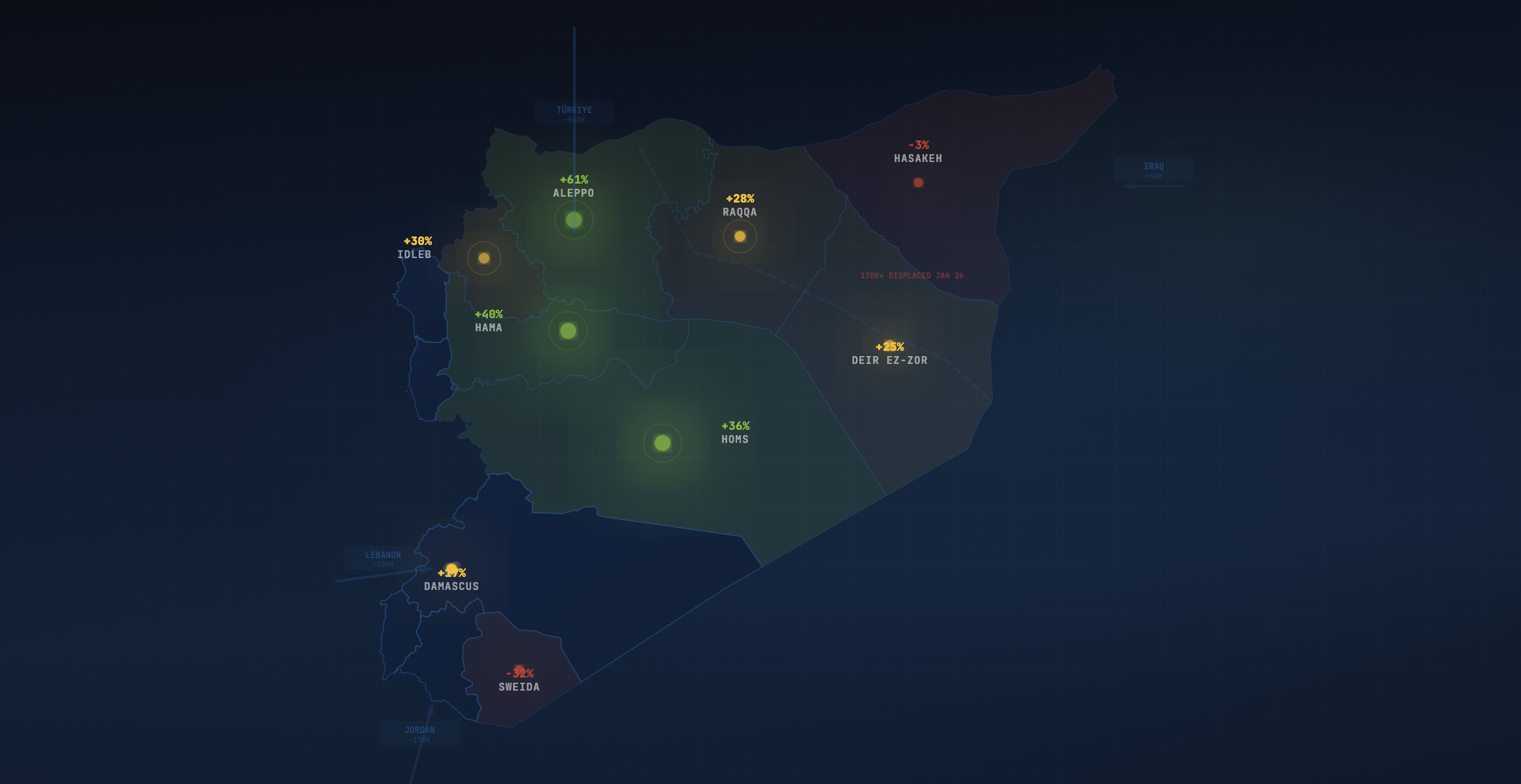
Energy Sector and Population Movement Nexus in Syria
This deep dive cross-references energy infrastructure data—power plant output, gas supply, oil production, satellite nighttime lights—with UNHCR displacement and return figures to surface a structural pattern: people return to where the lights are on.

Statistical Landscape of EU Migration Governance
This briefing draws on PRISM’s integrated data infrastructure — cross-referencing Frontex operational data, UNHCR arrival statistics, and Eurostat enforcement and asylum datasets — to provide a comprehensive statistical landscape of EU migration governance across 2023–2025.

Humanitarian Situation Monitoring Methodologies
This deep dive examines the methodological architecture behind humanitarian situation monitoring: the PAF's four-pillar analytical structure, the 15 standardised protection risk categories, PRISM's severity scoring formulas, and the indicators and parameters required for effective humanitarian intervention. It maps how global monitoring frameworks translate into actionable data — and where the gaps remain.

Syria Floods Update
On 7–9 February 2026, heavy rainfall triggered extensive flooding across 21 IDP sites in Idleb and northern Lattakia governorates, directly affecting 5,300 displaced people in some of Syria’s most vulnerable communities (OCHA Flash Update No. 3).

Sudan Situation Update
Sudan's war has now passed 1,000 days. What began as a power struggle between two generals in Khartoum in April 2023 has metastasised into the world's worst humanitarian crisis — surpassing Syria, Yemen, and Afghanistan on virtually every severity metric. An estimated 33.7 million people need humanitarian assistance. Famine has been confirmed in multiple locations. The health system has collapsed. And the international response is falling catastrophically short.
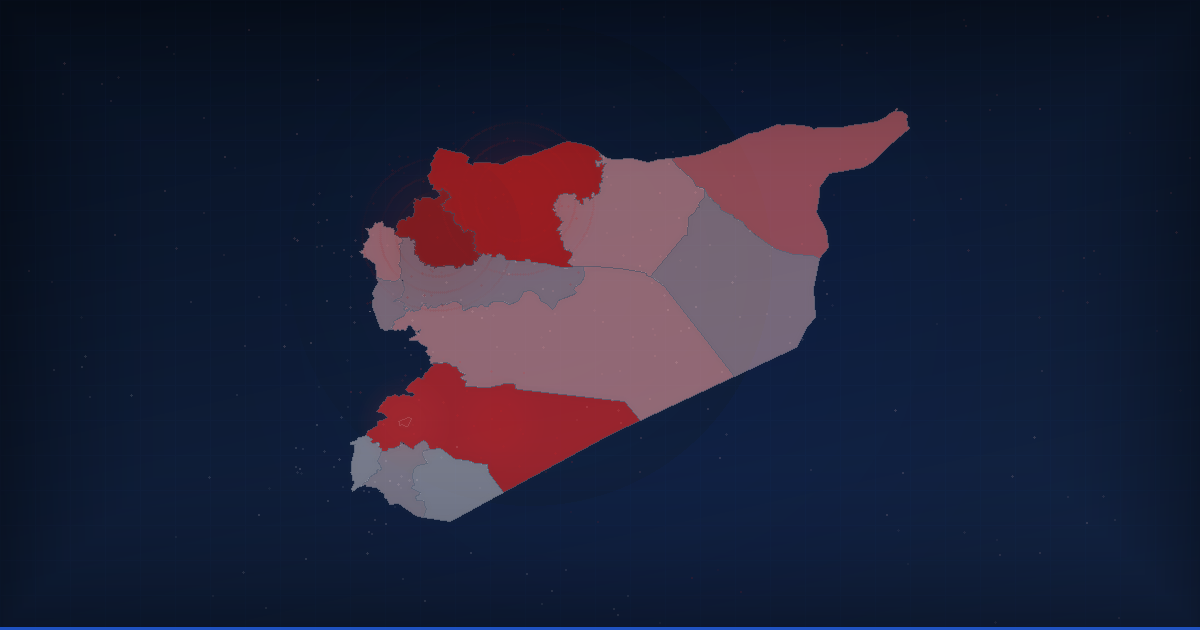
Syria Situation Update
One year after the fall of the Assad regime, Syria is navigating the most consequential period in its modern history. The establishment of a Transitional Caretaker Administration in December 2024, followed by the appointment of Ahmed al-Sharaa as Interim President in January 2025, opened a window of cautious optimism — marked by a National Dialogue Conference, the lifting of EU and US sanctions, and the return of over one million refugees.

Humanitarian Funding Cuts: Power, Prioritisation and Systemic Injustice in Global Humanitarian Aid
The international humanitarian system entered 2025 facing a crisis of legitimacy, morale, and funding. By mid-2025, global humanitarian aid had collapsed by 43%, from $36.9 billion in the previous year to $20.8 billion. This policy analysis examines the drivers, impacts, and implications of these unprecedented cuts, proposing structural reforms for a more equitable system.

Global Humanitarian Overview 2026
The Global Humanitarian Overview 2026, published by OCHA on 8 December 2025, reads less like a planning document and more like a managed withdrawal. Every headline indicator has been cut: people in need down 19%, people targeted down 21%, funding requirements slashed by 23% from $44.0 billion to $33.9 billion. On the surface, these reductions might suggest improving conditions. The reality is precisely the opposite.